
In this article, you’ll learn about the truth behind pyramid schemes and how they operate. We’ll discuss the key characteristics of pyramid schemes, the red flags to look out for, and the potential risks involved for participants. By the end, you’ll have a clear understanding of the inner workings of pyramid schemes and be equipped to protect yourself from becoming involved in one. So let’s get started and uncover the truth behind pyramid schemes!
The Truth Behind Pyramid Schemes
Pyramid schemes have been a topic of interest for many years, often leaving unsuspecting individuals facing financial ruin. In this article, we will explore what a pyramid scheme is, how it operates, and the devastating impact it has on participants and communities. We will also differentiate between pyramid schemes and legitimate multi-level marketing (MLM) businesses, and discuss ways to protect yourself from becoming a victim.
What is a Pyramid Scheme?
Definition of pyramid scheme
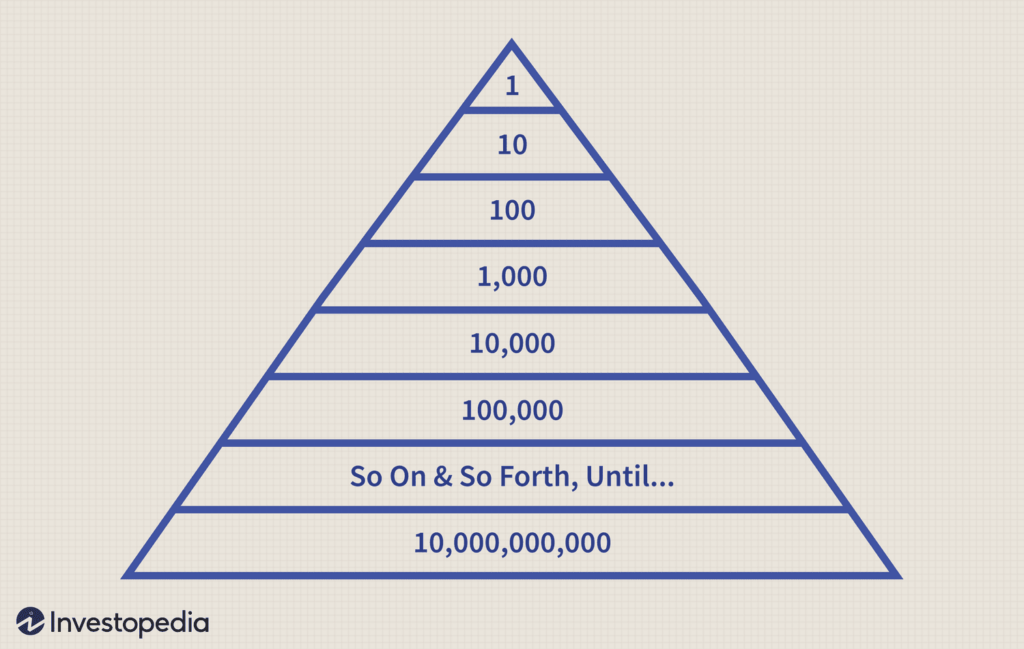
A pyramid scheme is a fraudulent investment opportunity that promises high returns for recruiting new participants into the scheme rather than through the sale of products or services. It is a deceptive business model that relies on an ever-increasing number of participants to sustain itself.
Characteristics of a pyramid scheme
There are several key characteristics that distinguish a pyramid scheme from a legitimate business model. First, pyramid schemes heavily rely on recruiting new members to generate revenue, often through promises of substantial financial gains. Second, there is usually an initial investment required to join the scheme. Third, pyramid schemes lack a sustainable product or service that generates consistent income.
How Pyramid Schemes Work
Recruiting participants
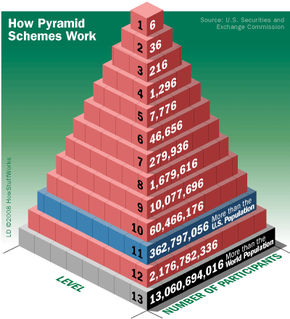
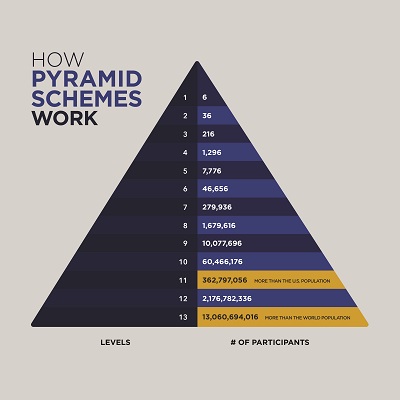
Pyramid schemes operate by enticing individuals with promises of easy money and financial freedom. Existing members play an active role in the recruitment process, encouraging new participants to invest in the scheme. The more people they recruit, the higher their chances of earning a profit.
Initial investment
To become a part of a pyramid scheme, individuals are typically required to make an initial investment. This investment can range from a small amount to a significant sum of money, depending on the scheme. The new participant is often told that this investment will yield substantial returns in a short period.
Lack of sustainable product or service
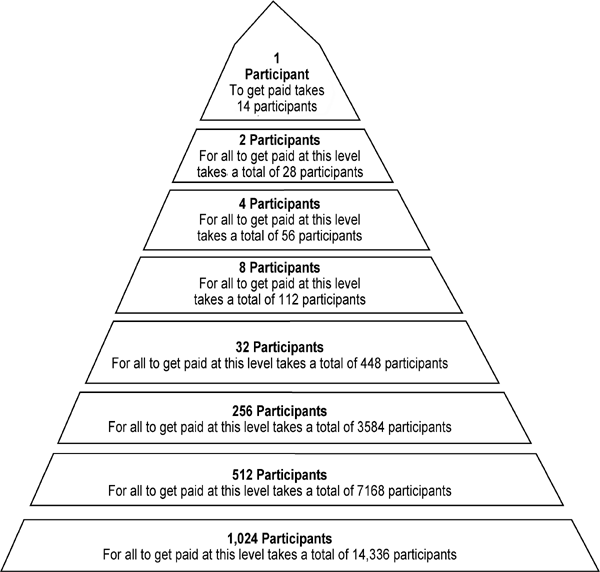
Unlike legitimate businesses that sell goods or services to generate revenue, pyramid schemes are solely dependent on the recruitment of new members. The absence of a sustainable product or service means that the scheme will eventually collapse since there is no legitimate source of income.
Pyramid Scheme vs. Multi-Level Marketing
Comparison between pyramid scheme and MLM
While pyramid schemes and MLM businesses may share some similarities, they are fundamentally different. MLM companies operate legally by selling products or services, with participants earning commissions from their sales as well as the sales made by those they recruit. In contrast, pyramid schemes focus primarily on recruitment and lack a genuine product or service.
Differences in structure and legality
MLM businesses have a multi-tiered structure where individuals can earn income from their own sales as well as the sales of their downline. These structures are legal when based on the sale of tangible products or services. Pyramid schemes, on the other hand, concentrate on recruitment and fail to offer a legitimate product or service. As a result, pyramid schemes are universally illegal.

Signs of a Pyramid Scheme
Promises of quick and easy money
Pyramid schemes often lure individuals with promises of instant wealth and financial success. They emphasize that participants can earn substantial profits within a short period without much effort. Beware of any opportunity that guarantees quick and easy money without a genuine product or service to back it up.
Emphasis on recruitment over product sales
One of the key red flags of a pyramid scheme is the focus on recruitment rather than the sale of products or services. If the primary goal is to recruit new members and there is minimal emphasis on selling genuine products, it is likely a pyramid scheme.
Lack of transparency
Pyramid schemes often operate with a lack of transparency, making it difficult for participants to fully understand the business model or how the scheme generates income. If the person or organization promoting the opportunity is evasive or unwilling to disclose essential information, it is a sign that something may be amiss.
Legal Issues and Pyramid Schemes
Laws and regulations against pyramid schemes
Governments worldwide have recognized the harmful nature of pyramid schemes and have implemented laws and regulations to protect unsuspecting individuals from falling victim. These laws generally make pyramid schemes illegal and impose penalties on those involved in their promotion or operation.
Enforcement actions and penalties
Law enforcement agencies actively investigate and shut down pyramid schemes to prevent further financial harm to individuals. Those found guilty of operating or promoting pyramid schemes may face severe penalties, including fines and imprisonment, depending on the jurisdiction and the magnitude of the scheme.
Impact of Pyramid Schemes
Financial loss for participants
The most significant impact of pyramid schemes is the financial loss experienced by participants. As the scheme inevitably collapses, the majority of participants are left with substantial financial losses. Many people invest their life savings or take on significant debt in the hopes of quick profits, only to find themselves devastated financially.
Negative impact on communities and economies
Pyramid schemes not only harm individual participants but also have a negative impact on communities and economies as a whole. When a large number of people fall victim to a pyramid scheme, the economic stability and trust within a community are compromised. Local economies suffer, and it can take years for communities to recover.
Famous Pyramid Schemes
Historical examples of pyramid schemes
Over the years, there have been several infamous pyramid schemes that have captured public attention. One such example is the “Ponzi scheme” orchestrated by Charles Ponzi in the early 20th century. Ponzi promised investors high returns on international postal reply coupons but used the funds from new investors to pay previous investors, eventually collapsing in financial ruin.
Notorious pyramid scheme cases
More recent notorious cases include the Bernie Madoff investment scandal, where Madoff defrauded investors of billions of dollars, and the TelexFree case, which operated as an international pyramid scheme disguised as an internet telephone service provider.
How to Protect Yourself
Research and due diligence
Before getting involved in any investment opportunity, it is crucial to conduct thorough research and due diligence. Scrutinize the business model, investigate the legitimacy of the products or services offered, and search for any reports or complaints about the company or individuals involved. Seeking opinions from industry professionals can also provide valuable insights.
Understand the business model
Educate yourself about the differences between legitimate MLM businesses and pyramid schemes. Look for telltale signs of a pyramid scheme such as a focus on recruitment, lack of a sustainable product or service, and promises of extraordinary returns with little effort.
Consult legal or financial professionals
If you have any doubts or concerns about the legitimacy of an investment opportunity, consult with legal or financial professionals who can provide expert advice. They can help analyze the risks and assess whether the opportunity is a legitimate business or a potential pyramid scheme.
Educational Initiatives and Awareness
Government campaigns against pyramid schemes
Governments and regulatory bodies actively work to educate the public about pyramid schemes. They conduct awareness campaigns to inform individuals about the risks associated with these fraudulent schemes, providing resources and guidance on how to identify and avoid them.
Educational resources for the public
Numerous educational resources are available to help individuals understand and recognize pyramid schemes. These resources often include brochures, websites, and workshops that aim to increase financial literacy and awareness of fraudulent schemes.
Conclusion
Understanding and recognizing pyramid schemes is essential in protecting yourself from falling victim to deceptive investment opportunities. The devastating impact of pyramid schemes on individuals, communities, and economies cannot be overstated. By exercising caution, conducting research, and seeking expert advice, you can make informed decisions and avoid the financial ruin often associated with pyramid schemes. Stay vigilant, educate yourself, and be wary of any opportunity that appears too good to be true. Your financial well-being is worth it.