
Are you curious about the differences between MLM and pyramid schemes? Look no further! In this article, we will shed light on the distinctions between these two business models. While both involve recruiting others and earning money through a multi-level structure, there are crucial variations to consider. By gaining a clear understanding of MLMs and pyramid schemes, you’ll be equipped with the knowledge to make informed decisions and protect yourself from potential scams. Let’s get started!
MLM Explained
Definition of MLM
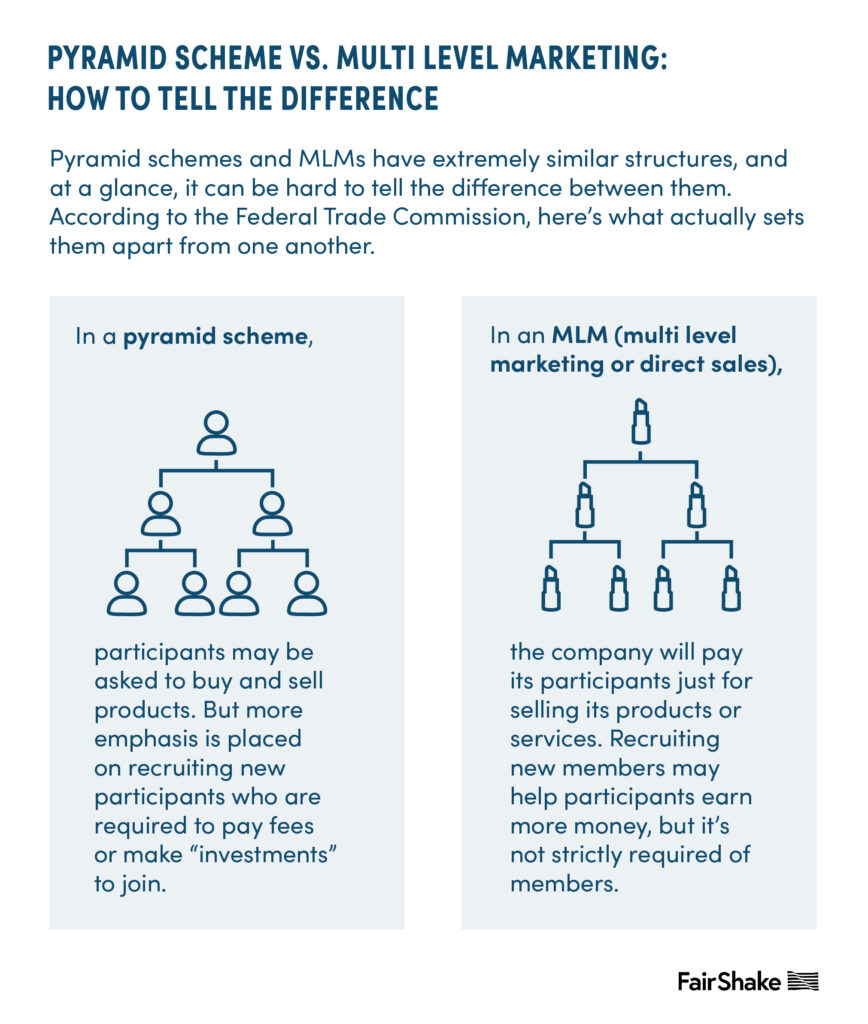
MLM, which stands for Multi-Level Marketing, is a business model that utilizes a network of independent distributors to sell products or services. It is also known as network marketing or direct selling. In MLM, individuals can earn income not only from their own product sales but also from the sales made by the distributors they have enlisted or recruited, creating a multi-level or hierarchical structure.
Characteristics of MLM
One characteristic of MLM is the emphasis on building a network of distributors. These distributors typically work on a part-time basis and can earn commissions based on their sales volume and the sales volume of their downline, the distributors they have personally recruited. Additionally, MLM companies often provide their distributors with training and support, helping them develop their sales skills and build their own network.
Products or Services Offered
One important aspect of MLM is the focus on selling tangible products or offering legitimate services. MLM companies operate in various industries, including health and wellness, beauty and skincare, household products, and personal development. These companies often have a wide range of products or services to offer, ensuring there is something for everyone within their distributor network.
Compensation Structure
MLM compensation structures typically include various components. Distributors can earn money through commissions on personal sales, bonuses for reaching certain sales targets, and overrides or commissions on the sales of their downline. Some MLM companies also offer additional incentives such as trips or car programs for top-performing distributors. The compensation structure in MLM is designed to reward both individual effort and team-building activities.
Emphasis on Selling Products
In MLM, the primary focus is on selling products or services to customers. Distributors are encouraged to approach their personal networks, host product parties or events, and utilize social media platforms to promote and sell the company’s offerings. This emphasis on selling products ensures that MLM companies generate revenue through legitimate sales, making it a legal business model.
Legal Status
MLM is a legal business model in many countries around the world, as long as it operates within specific guidelines and regulations. MLM companies must adhere to laws related to consumer protection, truth in advertising, and pyramid scheme regulations. It is crucial for MLM companies to have a genuine product or service offering and to prioritize sales over recruitment in order to maintain their legal status.
Pyramid Scheme Explained
Definition of a Pyramid Scheme
A pyramid scheme is an illegal business model that primarily focuses on recruiting participants rather than selling products or services. It operates by promising participants large profits based on the number of new recruits they bring into the scheme. The structure of a pyramid scheme resembles a pyramid, with a few individuals at the top who recruit others, and each level below enlarging as more individuals join.
Characteristics of a Pyramid Scheme
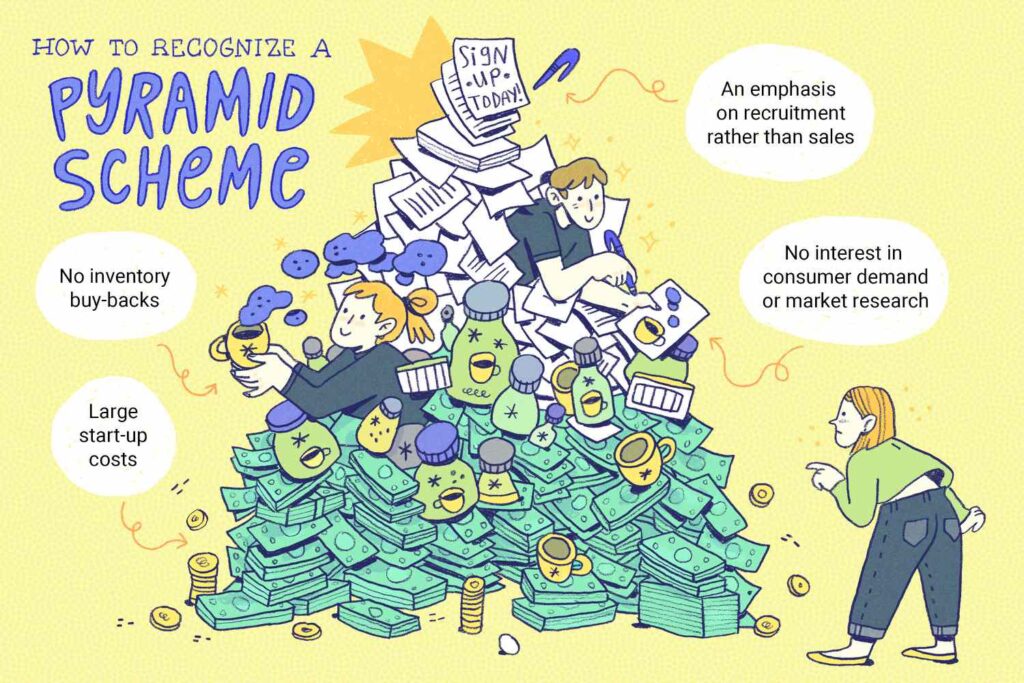
One key characteristic of a pyramid scheme is the lack of a genuine product or service being offered. The scheme relies heavily on recruitment, with participants paying an entry fee or purchasing inventory, often at inflated prices, in order to join. Participants are then encouraged to recruit others, who, in turn, recruit more individuals, creating a never-ending cycle of recruitment without a focus on actual sales or revenue generation.
Lack of Products or Services
Unlike MLM, pyramid schemes lack legitimate products or services. The scheme’s primary goal is to recruit as many people as possible and collect their initial investments or fees. This fundamental difference distinguishes pyramid schemes from MLM, as MLM companies have tangible products or services that distributors can sell and make a profit from.
Compensation Structure
In a pyramid scheme, the compensation structure revolves around recruitment and participant investments. Participants are promised high returns on their investments or fees if they bring in new recruits. The scheme relies on a constant influx of new participants to sustain the promised returns for existing participants. This compensation structure, focused solely on recruitment, is a clear indicator of a pyramid scheme’s illegal nature.
Focus on Recruiting
While MLM companies also encourage recruitment, pyramid schemes place a disproportionate emphasis on recruiting new participants. In a pyramid scheme, the true intent is to expand the network rapidly, as this is the only way for participants to earn income. However, the emphasis on recruiting and the lack of focus on selling products or services render pyramid schemes illegal in most jurisdictions.
Illegal Status
Pyramid schemes are universally considered illegal, as they operate in a deceptive and unsustainable manner. They rely solely on recruitment and the continuous influx of funds from new participants, with no emphasis on actual sales or revenue generation. Pyramid schemes are designed to collapse eventually, leaving the majority of participants at a financial loss.
Legal Differences
Is MLM Legal?
Yes, MLM is a legal business model in many countries. However, specific regulations govern MLM practices to prevent them from turning into pyramid schemes. MLM companies must ensure they have a legitimate product or service offering, comply with consumer protection laws, and prioritize product sales over recruitment. Compliance with these regulations ensures that the MLM business model remains legal.
Is a Pyramid Scheme Legal?
No, pyramid schemes are illegal in most countries. They operate on deceptive practices by promising high returns without a legitimate product or service offering. Pyramid schemes rely solely on recruitment, creating a financial structure that is unsustainable and ultimately collapses. Participating in a pyramid scheme can result in severe legal consequences, as individuals involved may face charges related to fraud and deceptive practices.
Primary Focus
Product Sales in MLM
MLM places a primary focus on selling products or services to customers. Distributors in MLM are encouraged to develop their sales skills and promote the company’s offerings through various channels. Successful MLM distributors prioritize building a customer base and creating repeat sales, ensuring a sustainable income stream for both themselves and the MLM company.
Recruitment in Pyramid Schemes
In pyramid schemes, the primary focus is on recruiting new participants, rather than selling products or services. The scheme relies on the constant recruitment of new individuals to sustain the promised returns for existing participants. This unbalanced emphasis on recruitment over sales is a key indicator of the illegal nature of pyramid schemes.
Compensation Structures
Multi-level Compensation in MLM
MLM compensation structures are multi-level, meaning that distributors can earn commissions not only from their personal sales but also from the sales made by the distributors they have recruited. These multi-level commissions create an incentive for distributors to build and support a network, as they can earn income from the sales volume generated by their downline.
Single-level Compensation in Pyramid Schemes
Pyramid schemes typically have a single-level compensation structure. Participants earn income primarily from the investments made by new recruits they bring into the scheme. There is usually no product sales component involved, as the scheme does not prioritize legitimate revenue generation. This single-level compensation structure highlights the deceptive nature of pyramid schemes.
Product or Service Offering
Legitimate Products or Services in MLM
MLM companies offer a wide range of legitimate products or services in various industries. These products or services are often of high quality and provide value to customers. MLM distributors have the opportunity to sell these offerings and earn commissions based on their sales volume. The availability of diverse and genuine products or services distinguishes MLM from pyramid schemes.
Lack of Legitimate Products or Services in Pyramid Schemes
Pyramid schemes lack legitimate products or services, which sets them apart from MLM. Participants in a pyramid scheme are typically required to invest a significant amount of money upfront or purchase inventory that has little to no market value. These schemes thrive on the recruitment of new participants and do not prioritize selling actual products or services.
Emphasis on Selling
Product Sales as Priority in MLM
In MLM, selling products or services is the top priority. MLM companies emphasize the importance of building a customer base and generating legitimate sales. MLM distributors are encouraged to promote and sell products directly to consumers, focusing on meeting customer needs and building long-term relationships. This product-centric approach ensures the sustainability of the MLM business model.
Lack of Focus on Product Sales in Pyramid Schemes
Pyramid schemes lack the emphasis on product sales that is characteristic of MLM. In a pyramid scheme, the focus is solely on recruiting new participants and encouraging them to invest money. The scheme does not prioritize the sale of tangible products or services, as its primary driver is the continuous recruitment of new participants to sustain the pyramid-like structure.
Recruiting vs. Selling
Recruiting Emphasis in MLM
While MLM companies do emphasize recruitment, the primary focus remains on selling products or services. MLM distributors are encouraged to share the business opportunity with others and recruit new distributors. However, recruitment is seen as a means to expand the customer base and increase the sales volume, rather than the sole objective of the MLM business model.
Focus on Recruiting in Pyramid Schemes
In pyramid schemes, recruiting new participants is the central objective. Participants are typically promised high returns based on the number of recruits they bring into the scheme. The constant influx of new participants is necessary for existing participants to receive any kind of income. This focus on recruiting, rather than genuine sales or revenue generation, characterizes pyramid schemes.
Sustainability and Longevity
MLM as a Sustainable Business Model
MLM, when operated ethically and legally, can be a sustainable business model. The combination of product sales, team-building activities, and a compensation structure that rewards both individual effort and team success ensures the long-term viability of MLM companies. With a strong emphasis on product sales and customer satisfaction, MLM companies can establish a loyal customer base, driving sustained revenue.
Pyramid Schemes as Unsustainable and Short-lived
Pyramid schemes are inherently unsustainable and short-lived. Due to their heavy reliance on recruitment and the lack of genuine product sales, pyramid schemes eventually collapse under their own weight. Once the recruitment stream slows down or stops, the promised returns to participants become impossible to sustain. This inherent flaw in their structure results in most pyramid schemes collapsing, leaving participants at a financial loss.
Examples in History
Well-known MLM Companies
Several well-known MLM companies have enjoyed success and longevity in their respective industries. Amway, Avon, Herbalife, and Mary Kay are among the most recognizable names in the MLM industry. These companies have established strong product lines, loyal distributors, and a positive reputation over several decades. Their success demonstrates the potential for MLM as a legitimate and sustainable business model.
Notorious Pyramid Scheme Cases
Throughout history, there have been numerous notorious pyramid schemes that have collapsed, leaving participants financially devastated. One infamous example is the case of Bernie Madoff and his multibillion-dollar Ponzi scheme. Madoff promised high and consistent returns to investors, but the scheme eventually unraveled, resulting in significant financial losses for many individuals. These cases highlight the dangers and illegality of pyramid schemes.
In conclusion, MLM and pyramid schemes differ significantly in their characteristics, legal status, focus, compensation structures, and product offerings. MLM operates legally and ethically, prioritizing legitimate product sales and sustainable income generation through a multi-level compensation structure. On the other hand, pyramid schemes are illegal and unsustainable, relying heavily on recruitment without a genuine product or service offering. Understanding these differences is crucial for individuals looking to participate in a business opportunity or investment scheme, ensuring they avoid any illegal or deceptive practices.